VIKING safety equipment: identification and service guide
How to identify a VIKING liferaft or fire-safety unit, understand the product variant and prepare the records an authorised station needs before accepting the equipment.
Sources checked August 2, 2026
VIKING's name appears across a broad marine-safety portfolio, so the logo alone is not enough to define the work. The service decision follows the exact equipment type, model designation, serial number, approval, pack and installation. On a liferaft, small suffixes can distinguish standard and environmentally packed versions; on fire equipment, the system or cylinder record determines a different service route.
The Safety Pelican services VIKING equipment within its current authorised scope in Sint Maarten. Acceptance is confirmed unit by unit because manuals, parts, test requirements and certification follow the individual product. Send clear identification before removing equipment from the vessel, particularly when a sailing date or temporary replacement arrangement matters.
Read the VIKING identification plate before reading the service date
For a canister-packed liferaft, photograph the complete container and the identification plate without disturbing the strap, painter, weak link or hydrostatic-release arrangement. VIKING's onboard guidance lists capacity, approval details, serial number and servicing information among the data carried on the container label. Add close photographs of every face of the canister because the type designation or suffix can sit separately from the most obvious date label.
For a valise, record the external label and the way the raft is stowed. For cylinders or fire-system components, photograph the equipment plate, cylinder shoulder markings, release or control head and the last service record. Do not open a raft container or operate a release to find an internal marking; VIKING expressly reserves liferaft servicing and opening for authorised service personnel.
- Manufacturer and full model designation
- Serial number and capacity
- Approval and emergency-pack markings
- Last-service and next-service information
- Container, valise or installed-system overview
Do not lose the suffix: it can change the maintenance arrangement
VIKING documentation distinguishes product variants in the type designation. For example, the manufacturer describes S30 rafts as environmentally packed for extended service intervals and requires annual onboard inspection; use of an extended interval also depends on flag approval and the precise type approval. A crew member should never infer an interval merely because another VIKING raft aboard carries a similar-looking canister.
The same discipline applies to capacity, SOLAS A or B pack, ISO configuration, throw-overboard or davit launch and maximum launch height. Those are part of the installed safety arrangement, not interchangeable accessories. When requesting service, transcribe the full model exactly and attach the label photograph so the station can match the request to current technical instructions.
- Full type suffix
- Standard or extended-service packaging
- Pack designation
- Throw-overboard or davit arrangement
- Flag acceptance of any extended interval
What authorised liferaft service is designed to control
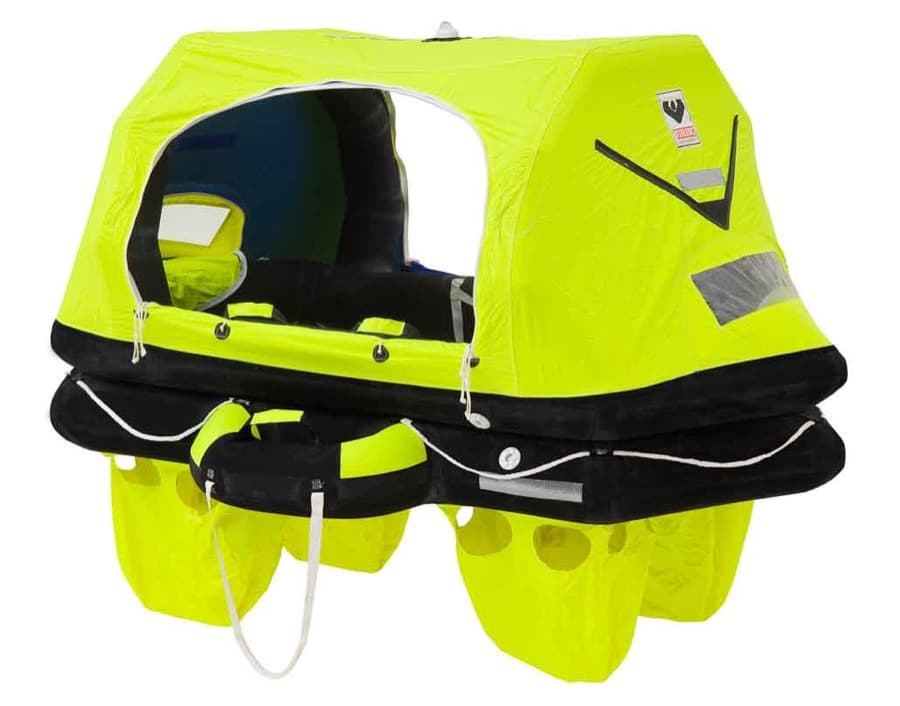
A controlled service is more than changing an expiry label. The raft is opened under the applicable VIKING procedure, its condition and inflation system are inspected, required tests are performed, time-limited emergency contents are checked, authorised repairs or replacements are recorded and the unit is repacked in the prescribed sequence. The manufacturer describes uniform inspection, cleaning, repair and documentation processes across its service network.
External installation still matters after repacking. The cradle, securing strap, painter, hydrostatic release and weak link must form the intended float-free or manual arrangement, and onboard instructions must remain available to the crew. Work on the packed raft does not automatically certify the vessel's installation; agree explicitly whether removal, reinstallation or onboard attendance is part of the request.
- Condition and inflation-system inspection
- Required pressure and component tests
- Expiry-controlled pack contents
- Authorised repair and repacking
- Serial-specific service documentation
Prepare the handover so the station can protect the sailing plan
Send the vessel name, flag, operating status, port, equipment location, preferred service window and next sailing date with the equipment photographs. Include the previous certificate and any flag, class or survey instruction. Report broken seals, container impact, suspected water ingress, accidental release, missing installation parts or a unit moved from another vessel before delivery—not after the raft has entered the workshop.
The station can then confirm whether the exact VIKING unit falls within current scope, what external components should accompany it and whether a rental or schedule discussion is needed. Keep the returned certificate with the vessel register and compare its manufacturer, model and serial number to the physical unit before reinstallation.
- Vessel and regulatory context
- Complete label photographs
- Previous service certificate
- Damage or installation concerns
- Required return date and replacement-cover need
Official sources
Manufacturer and authority references for this guide. Check the current requirements for your equipment and vessel.
- Onboard maintenance manual for liferaft installation
VIKING Life-Saving Equipment
- Liferaft service
VIKING Life-Saving Equipment
- Liferaft user instructions
VIKING Life-Saving Equipment