
Ocean Signal beacons: identification and service guide
Prepare an Ocean Signal EPIRB, PLB or MOB device for support by matching its exact model, UIN, registration, battery and installation.
Sources checked August 2, 2026
Ocean Signal's marine range includes EPIRBs, PLBs, AIS man-overboard devices and related electronic safety products. These devices can look compact and self-contained, but their approval, radio identity, activation method, registration and battery process are product-specific. A model name such as EPIRB1, EPIRB3, PLB1, PLB3 or MOB2 is not interchangeable with the next.
The Safety Pelican supports Ocean Signal equipment within its current authorised scope in Sint Maarten. Send the complete label and operational context before delivery so the station can confirm whether it can perform the requested work and which current manual or technical bulletin applies.
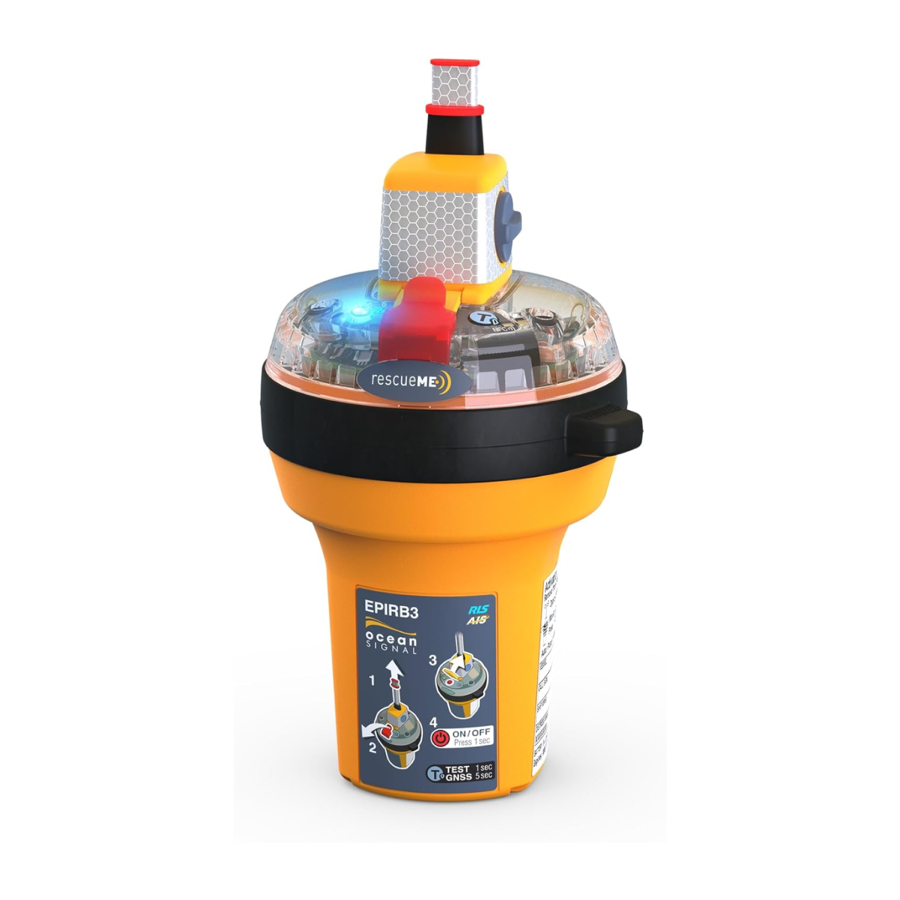
Use the exact model and identity label
Photograph the product front and rear, identity label, battery date, bracket or housing and hydrostatic release where fitted. Record model, serial number, UIN or Hex ID, approval and programmed country. For a MOB device integrated into a lifejacket, document the lifejacket and activation arrangement as well as the beacon itself.
Ocean Signal maintains separate manuals, quick-start guides, approvals and technical bulletins by model. Download the document matching the label rather than relying on a video or manual for a similar generation. Use self-test only in the permitted manner and record the displayed or flashed result without repeated testing.
- Exact model and serial
- UIN or Hex ID
- Battery expiry
- Bracket, housing or lifejacket integration
- Matching current manual
Registration must agree with the programmed country
Ocean Signal advises that EPIRBs and PLBs be registered in the owner's or vessel's appropriate country and warns that a unit sourced from another country must be configured for the intended registration. The beacon's programming and the authority database are separate: both must be correct for search-and-rescue responders to connect a distress signal with useful owner and voyage information.
Review registration after purchase, ownership transfer, vessel reflagging or reprogramming. Retain confirmation with the equipment file. If the device carries an MMSI-dependent AIS or DSC function, verify the programming and rules for that model rather than assuming the 406 MHz registration covers every identity field.
- Programmed country
- National authority registration
- Owner and vessel details
- MMSI-dependent functions where applicable
- Updates after transfer or reflagging
Check battery date, self-test history and technical bulletins together
The printed battery date sets a visible maintenance deadline, but an activation, failed test, case damage or manufacturer bulletin can require action earlier. Ocean Signal's support library publishes manuals, service information letters and technical bulletins; reviewing them by exact model is part of responsible ownership, not an optional extra reserved for a failure.
Do not open a sealed beacon or fit an unapproved battery. Ask for the current authorised service route and lithium transport instructions. When a battery or housing service is completed, the returned unit should be functionally checked and its new date and service record should remain traceable to the serial number.
- Battery expiry label
- Self-test history
- Model-specific technical bulletins
- Authorised battery process
- Serial-specific service record
Close the loop from service to installation
Send photographs, registration country, vessel flag, prior service information, test result and reason for service. Include the automatic enclosure, bracket, lanyard or lifejacket integration if it affects release or activation. State the vessel's departure date and any survey requirement at the start.
On return, reconcile model, UIN, battery date and certificate. Confirm the registration record still matches, reinstall the device in the approved position and replace any external hydrostatic release according to its own date and instruction. A serviced beacon left in the wrong bracket or registered to the wrong vessel is not a closed safety task.
- Complete device and installation photographs
- Registration and flag context
- Test or incident history
- Departure and survey dates
- Post-service registration and installation check
Official sources
Manufacturer and authority references for this guide. Check the current requirements for your equipment and vessel.
- Ocean Signal support
Ocean Signal
- Documents and technical bulletins
Ocean Signal
- Frequently asked questions
Ocean Signal