
Liferafts explained: types, equipment and choosing the right one
Understand how liferafts work, what the different types offer, and how to choose and care for one aboard a pleasure boat, yacht or commercial vessel.
Sources checked September 7, 2026
A packed liferaft gives little indication of what is inside. The container tells you its capacity and service details, but it cannot show how someone will climb aboard, what shelter they will have or which supplies will be available once they have left the vessel. Those are the details that give a liferaft its purpose.
Choosing one means bringing that equipment together with the realities of your boat. A raft needs to suit the voyage and the people aboard, fit an accessible position and remain serviceable throughout its life. Understanding how it works makes those decisions much easier.
What is a liferaft?
A liferaft is a survival craft carried for use when people must abandon a vessel. The inflatable models covered here remain folded inside a rigid container or a soft carrying bag, known as a valise, until they are deployed. Once inflated, they provide a floating platform that keeps survivors together. A canopy, where fitted, adds shelter from wind, spray and weather.
That purpose distinguishes a liferaft from the boat’s tender. A tender is intended for everyday transport and should not be assumed to provide the shelter, survival equipment or approval of a liferaft. A lifeboat is a different type of survival craft, normally with a rigid hull and its own propulsion.
The raft forms part of the vessel’s emergency arrangements alongside lifejackets, distress communications and crew preparation. Whether to abandon the vessel remains a separate decision, based on the immediate danger and whether staying aboard is still safer.
The different types of liferafts
Liferafts are described in several ways: by the waters they are intended for, their construction, their approval or how they are launched. These descriptions overlap. An offshore yacht raft, for example, may also be canopied and self-righting.
Pleasure boaters will most often encounter coastal and offshore leisure rafts. The distinction involves the protection and equipment provided, including the floor insulation, canopy, boarding aids, inflation temperature range and emergency pack. These details deserve attention when planning a longer passage; the word “offshore” in a product name does not, by itself, explain what a particular raft offers.
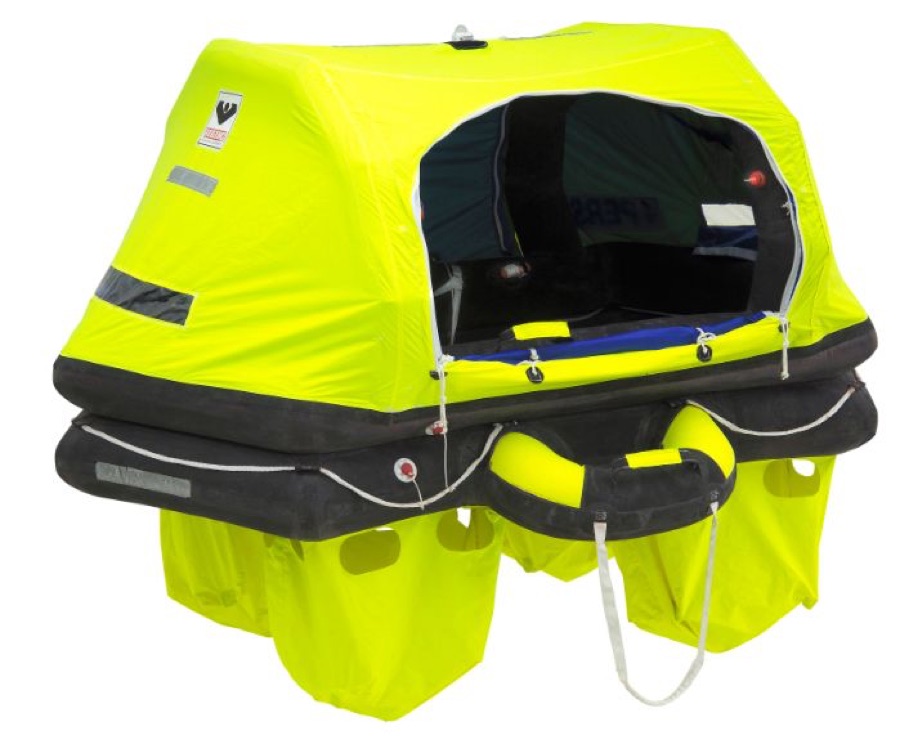
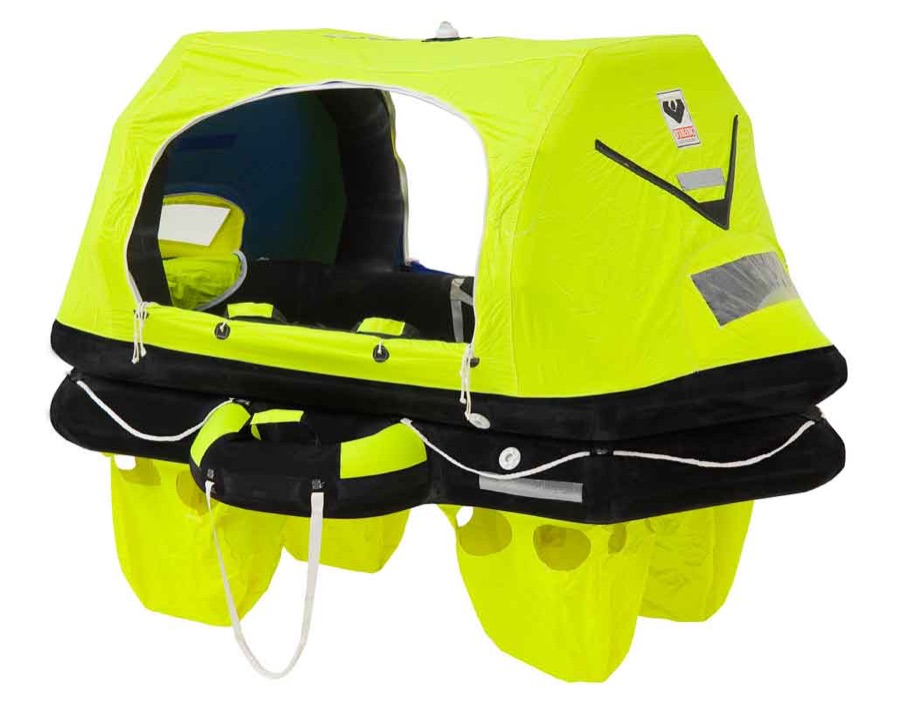
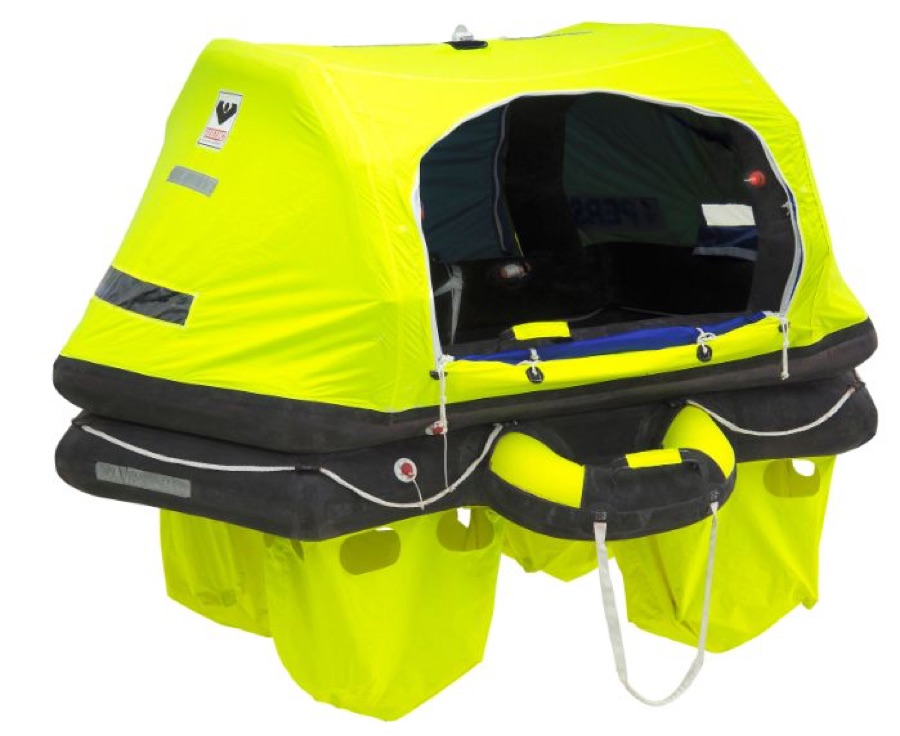
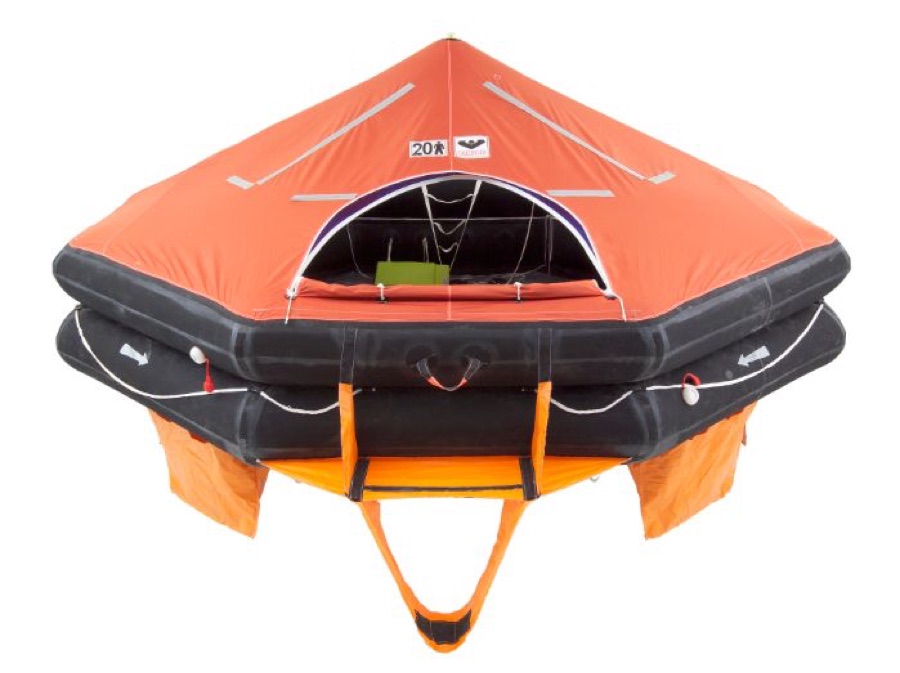
A canopy encloses the space above the buoyancy tubes, providing shelter while leaving entrances for boarding and access. Canopied rafts appear in recreational and commercial ranges. Their outward resemblance can therefore be misleading: two sheltered rafts may have different equipment, approvals and intended uses.
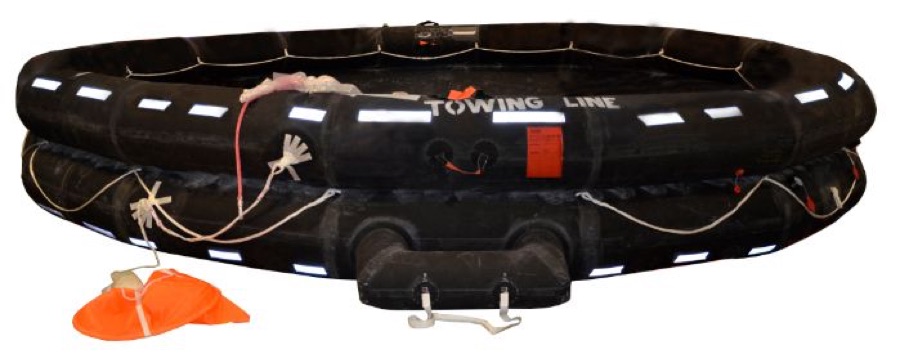
Open-reversible rafts take a different approach. They have no canopy and can be used whichever side is uppermost. They appear in specialised evacuation arrangements, including certain high-speed passenger operations. Their purpose differs from that of a sheltered offshore yacht raft.
A self-righting raft is designed to return to its intended upright position after inflation. This is different from a reversible raft, which can be used either way up. With a raft that has neither feature, occupants may need to right it using the manufacturer’s procedure before boarding.
Commercial installations may use throw-overboard rafts, davit-launched rafts or rafts that form part of a marine evacuation system. The vessel’s approved safety arrangement determines which belongs aboard. Capacity is only one part of that arrangement; a larger recreational raft does not become suitable for commercial service simply because it carries enough people.
How a liferaft works
While the raft is carried aboard, its inflatable structure is folded inside the container or valise. Packed with it is a cylinder of compressed gas, ready to fill the tubes when the inflation mechanism is activated.
On a throw-overboard raft, that mechanism is operated through a cord called the painter. Before launching, the crew make sure the painter is secured to the boat at the attachment point specified by the manufacturer. They then release the packed raft from its stowage position and throw it overboard, leaving it connected to the vessel.
Pulling out the painter, followed by the firm pull described in the raft’s instructions, activates the inflation system. Gas flows from the cylinder into the inflatable tubes, and the expanding raft opens its container or bag as it takes shape on the water. The crew do not need to inflate it with a pump. Simply throwing this type of raft overboard does not trigger inflation.
Some deck-mounted containers also have a hydrostatic release unit, which allows the raft to be released automatically if the vessel sinks. Water pressure operates the unit when it is submerged, freeing the container from its securing arrangement so it can float upwards.
As the sinking vessel moves away beneath the container, the painter pays out and pulls tight, activating inflation. A separate connection called a weak link then breaks, allowing the inflated raft to separate from the vessel. Each part has a particular job, and the sequence depends on a correctly fitted float-free installation. Not every raft has this arrangement.
Once inflated, the tubes support the raft and its occupants on the water. The crew board through the entrance using the available boarding aids, although a raft that has inflated upside down may first need righting.
Davit-launched rafts follow a different sequence. They are designed to be inflated and boarded at an embarkation position before being lowered into the water with people inside. Knowing which arrangement is fitted aboard—and learning its instructions before an emergency—is therefore part of using the equipment properly.
What comes inside a liferaft?
The raft’s emergency pack provides equipment for the period after abandonment. Depending on the specified pack, it may contain signalling equipment, first aid supplies, water and rations, paddles, a sea anchor, repair equipment, and a bailer and sponge. The exact inventory matters because these items and their quantities vary between packs.
That variation is one reason apparently similar liferafts can be offered with different specifications. ISO pack descriptions and SOLAS A or B packs refer to different requirements. The supplier’s documentation should make clear which pack is included, what is sealed inside the raft and what needs to be carried separately. A duration stated in a pack description should not be read as a promise about rescue time or survival.
A grab bag complements those packed supplies. Distress communications, personal medication and other essentials may need to remain accessible aboard until they are taken into the raft. Its usefulness depends as much on preparation as on its contents: the crew need to know where it is and who will take it.
Understanding standards and requirements
A liferaft’s approval helps explain the requirements it was designed to meet. For small craft, the ISO 9650 series addresses inflatable liferafts. ISO 9650-1:2022 covers Type 1 and Type 2 rafts and replaced the separate 2005 parts. Earlier terminology still appears in certificates and catalogues, making the edition and type on the actual documentation more useful than a general “ISO” description.
SOLAS—the International Convention for the Safety of Life at Sea—works with the International Life-Saving Appliance Code, usually called the LSA Code. Where these requirements apply, the raft forms part of an approved survival-craft arrangement aboard the vessel.
The equipment standard and the vessel’s carriage requirements have different roles. One describes the raft’s design and performance requirements; the other establishes what the vessel must carry and how it must be arranged. Flag, operating area, certification and private or commercial use all influence that decision. Commercial vessels do not all require the same raft.
For a private boat, the starting point is the requirement applicable to that boat and its intended voyage. Charter yachts and commercial vessels also need to work from the relevant code, survey documents and flag instructions. A replacement raft or altered installation may need agreement from the responsible surveyor or authority, particularly where the vessel’s flag or use has changed.
Choosing the right liferaft for your vessel
Once the required approval is established, the choice becomes more practical. The raft must accommodate the maximum number aboard, but the people who normally sail the boat must also be able to reach and handle it. Its capacity, packed weight, dimensions and boarding arrangement therefore need to be considered together.
On a pleasure boat or small yacht, space and handling can be decisive. A protected stowage position is useful only if the raft can be retrieved when needed. The crew’s abilities matter too: children or people with limited mobility may need assistance boarding, and that deserves consideration while choosing the equipment.
For a cruising yacht, the longer passages in the itinerary help define the requirement, even when most sailing is between nearby ports. Shelter, floor insulation, righting arrangements and the emergency pack become part of the same decision. Servicing also needs to fit the voyage, particularly when the boat moves between regions.
Larger yachts introduce questions about the distribution of guests and crew, access from different parts of the vessel and launching height. Private and charter operation may bring different requirements. Replacing several smaller rafts with one larger raft changes the safety arrangement as well as the total capacity.
Commercial replacements begin with the approved survival-craft plan. Raft distribution, embarkation positions and compatibility with davits or evacuation systems all need to remain appropriate. A replacement with the same capacity is not necessarily an equivalent installation.
A cruising couple who occasionally carry four guests illustrates how these considerations meet. Their choice must account for the full complement, while remaining manageable when only the two of them are aboard. The capacity label alone cannot answer both questions.
Where to store it and how it is launched
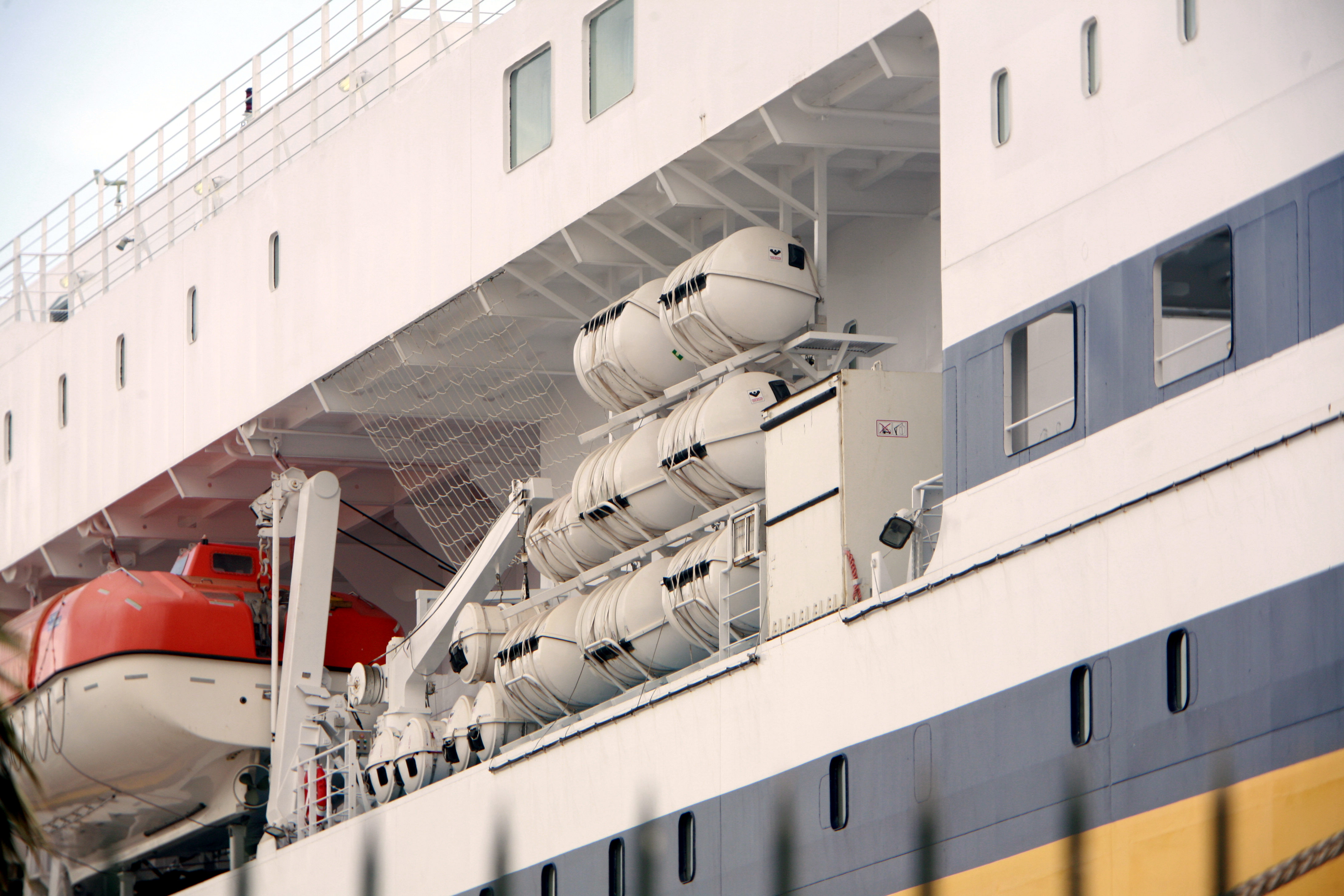
The container is part of the installation. A rigid canister needs a suitable mounting arrangement, while a valise needs protected, dry and readily accessible stowage in accordance with its instructions. The space available aboard must accommodate both the packed raft and the route by which it will be brought out.
For a throw-overboard raft, that route ends at a position from which it can be deployed and boarded using the vessel’s arrangements. A davit-launched raft instead needs compatible lifting and release equipment at its embarkation position. The raft and launching appliance are designed to work together.
A float-free installation adds the automatic release sequence described earlier. Its hydrostatic release unit, painter and weak link perform separate functions, so the manufacturer’s connections and securing arrangement matter. Extra lashings or improvised connections can prevent the container from releasing as intended.
Walking through access with the crew helps reveal problems that measurements alone may miss. Stored gear, rails and nearby fittings can obstruct removal or launching. The position also needs to fall within the model’s permitted launching height and work within the vessel’s emergency arrangements.

Servicing and looking after your liferaft
Most of a liferaft’s equipment remains hidden during its working life. Servicing allows an authorised station to unpack the raft, inspect and test it under the manufacturer’s procedure, check the inflation system and emergency supplies, and renew items where required. It is then repacked with updated records.
The schedule for that work depends on the model and the requirements applying to the vessel. There is no single interval that covers every raft. UK MCA guidance, for example, generally requires SOLAS inflatable appliances to be serviced at intervals no longer than 12 months, with specified exceptions. That requirement should not be carried across indiscriminately to leisure rafts; extended-service arrangements also have their own conditions.
Between services, the owner’s checks concern the accessible parts of the installation: the container or valise, securing arrangement, labels and release equipment. An HRU or another component may have a separate replacement date. Damage, accidental deployment or concerns about storage should be referred to an authorised station rather than investigated by opening the sealed raft aboard.
Servicing also involves time away from the vessel. Transport, workshop availability and support for the exact make and model all belong in the planning. Keeping the raft’s identity and service certificate together helps the station establish what is required. Where the vessel must carry a raft to operate, suitable replacement cover needs resolving before sailing without it.
Getting your crew familiar with the equipment
Familiarity starts with the equipment actually carried aboard. The crew should know where the raft and grab bag are, how the raft is released and where they would board. Those tasks belong in the vessel’s emergency briefing, supported by the manufacturer’s instructions.
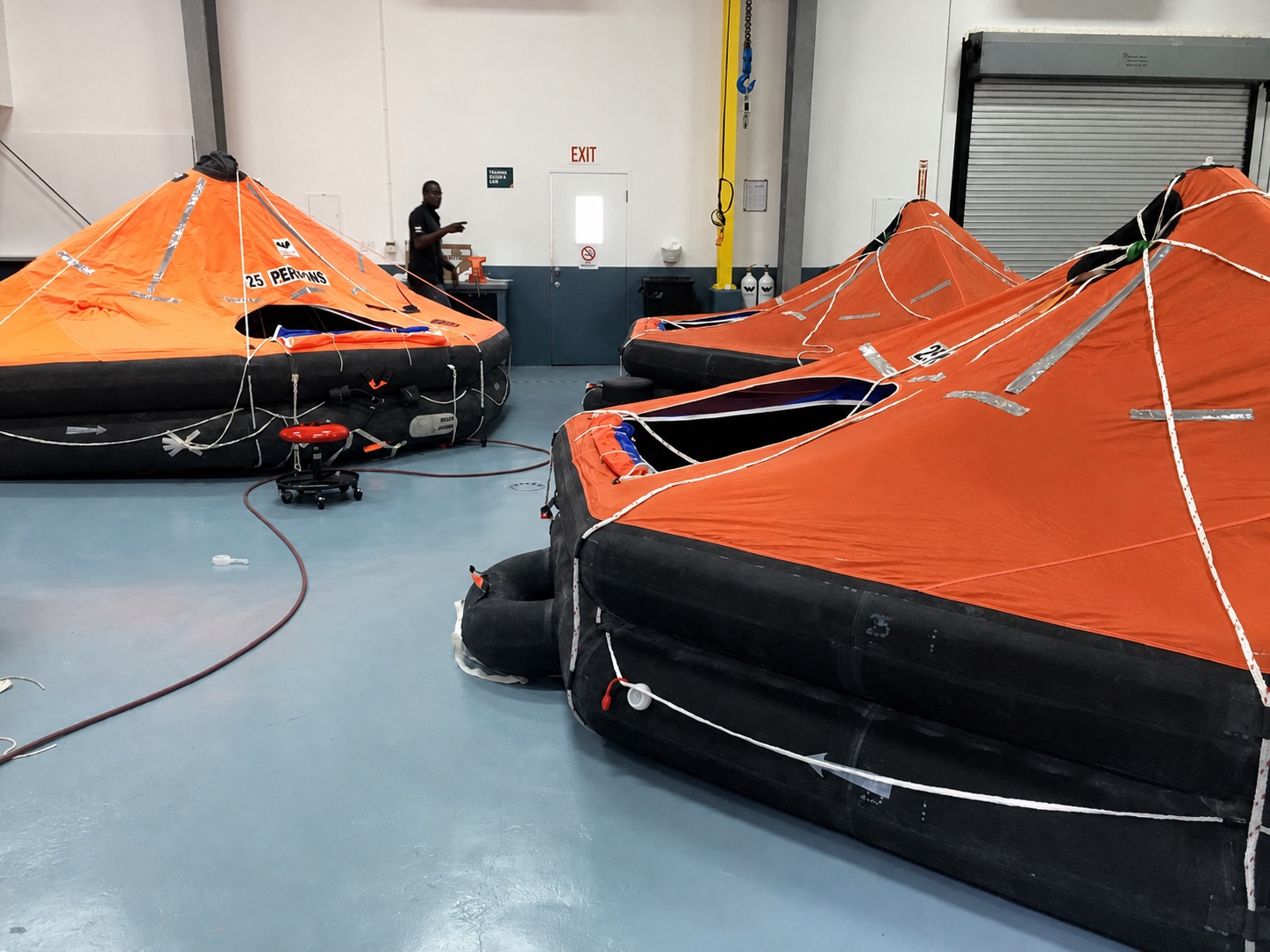
Practical sea-survival training gives those instructions context. Boarding, assisting another person and handling survival equipment make more sense when experienced with training equipment or an organised demonstration. The vessel’s sealed raft should remain packed rather than being deployed for practice.
When a new or replacement raft arrives, the handover is an opportunity to connect the purchase, installation and crew preparation:
- The model, capacity, approval and emergency pack match the order and vessel requirement.
- The container or valise fits the intended location, with a suitable release and launching arrangement.
- The documents identify the supplied raft and its next service requirements.
- The crew know where it is, how to access it and which instructions apply.
Official sources
Manufacturer and authority references for this guide. Check the current requirements for your equipment and vessel.
- Life-saving appliances
International Maritime Organization
- ISO 9650-1:2022 — small-craft liferafts, Type 1 and Type 2
International Organization for Standardization
- Choosing your liferaft — model features
VIKING Life-Saving Equipment
- Liferaft user instructions
VIKING Life-Saving Equipment
- Anatomy of a liferaft — illustrated model and pack example
VIKING Life-Saving Equipment
- Storage and installation — RescYou range
VIKING Life-Saving Equipment
- Davit-launched liferaft — 12DKF+ example
VIKING Life-Saving Equipment
- Servicing a RescYou liferaft
VIKING Life-Saving Equipment
- How to abandon ship — preparation and training
RNLI
- Inside the grab bag
RNLI
- MGN 548 (M+F) Amendment 1 — inflatable SOLAS life-saving appliances
UK Maritime and Coastguard Agency
- H20 hydrostatic release units — release and weak-link functions
CM Hammar
- MGN 553 Amendment 1 — UK guidance for non-SOLAS liferafts
UK Maritime and Coastguard Agency
- VIKING RescYou Pro — deployment demonstration on YouTube
VIKING Life-Saving Equipment