
How to choose a liferaft brand
Understand the differences between liferaft brands, compare the models that suit your vessel, and look beyond the purchase price to servicing and support.
Sources checked September 8, 2026
A liferaft may remain aboard for years, during which its servicing and support become as much a part of ownership as its original specification. Choosing a brand means considering both the equipment you are buying and how you will look after it.
The vessel gives that comparison its starting point. A couple cruising the islands, a yacht making ocean passages and a commercial vessel carrying passengers have different requirements. Once those are clear, the differences between individual models become much more useful than the reputation of a name alone.
Compare models, not just brand names
A manufacturer’s range may include coastal leisure rafts, offshore models and equipment for commercial installations. Even within one model family, the capacity, approval and emergency equipment can vary. Two quotations carrying the same brand name may therefore describe quite different purchases.
Some of that difference may be inside the raft. The emergency pack contains the survival equipment supplied with it, and its contents affect what is included in the price. Packaging introduces another distinction: a valise is a soft carrying bag, while a container is a rigid case. Our guide to choosing a liferaft explains those choices and the relevant standards.
A useful comparison begins with the same brief for each supplier: the operating area, maximum number aboard and applicable flag-state, commercial or racing requirements. The full model designation then allows you to see whether the quotations meet that brief on comparable terms.
An inflated demonstration raft, where available, adds something a specification sheet cannot. It lets you see the entrance, handholds, boarding aids and occupied space together. A ladder or ramp is easier to assess when you can picture someone using it in a lifejacket, while the canopy and floor explain more about the shelter available once aboard.
VIKING: Coastal, Ocean and Pro
VIKING’s RescYou yacht range includes Coastal, Ocean and Pro models. Coastal is intended for coastal use, while Ocean is the offshore model. Pro adds a self-righting design intended to bring the raft upright if it inflates upside down, reducing the need for someone in the water to right it.
That feature addresses a particular part of deployment, but the rest of the raft still deserves attention. Its entrances, floor and emergency pack determine other aspects of use, while the packed dimensions and weight affect where it can live aboard. On a small yacht, the chosen model needs to combine suitable protection with an installation the crew can reach and handle.
VIKING’s liferaft service network helps connect the purchase to the vessel’s cruising plans. A station along the route can discuss support, turnaround and any parts that need ordering once it has the exact model details.
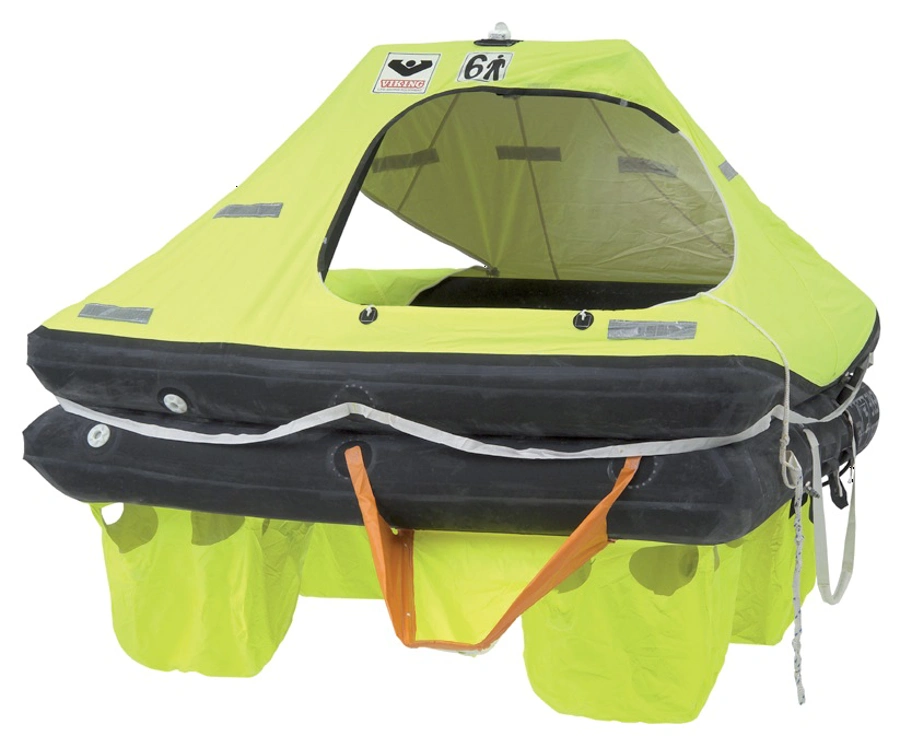
RescYou Coastal
Coastal yachting model, shown inflated.
Photo: VIKINGArimar: understand the model and pack
Arimar’s Atlantic and Seaworld liferafts sit within a range that also includes coastal and market-specific models. The letters following the model name identify different versions, so a quotation described simply as an “Arimar ISO liferaft” leaves important details unresolved.
The complete product code connects the price to a particular capacity, emergency pack and container or valise. Arimar’s product pages provide the detail needed to understand those differences and discuss suitability with the supplier. This is particularly useful when buying abroad, where a version intended for one market may differ from the equipment specified for your vessel.
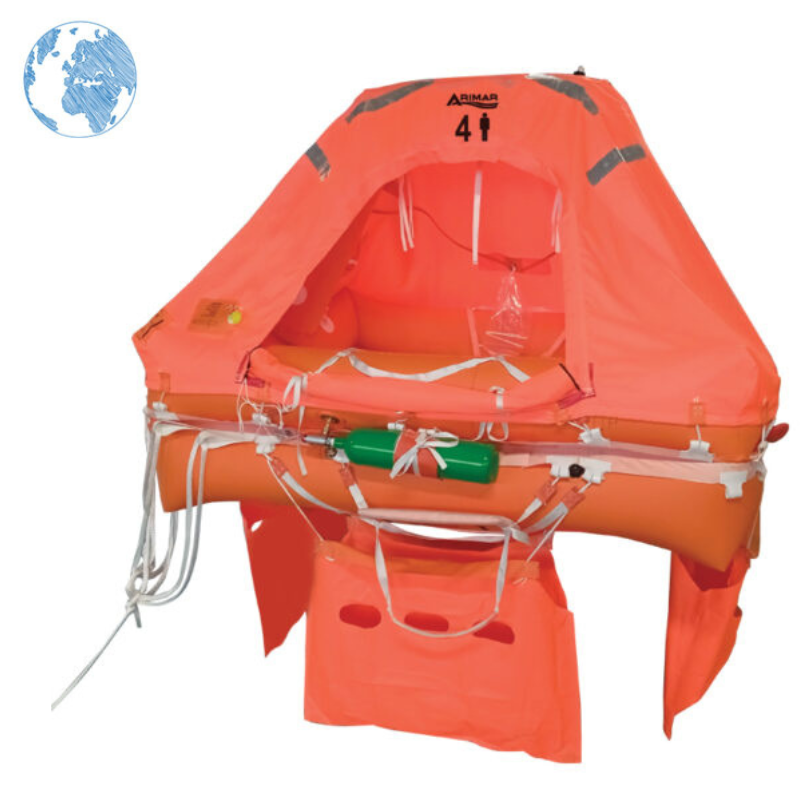
ISO Seaworld II
Seaworld II PB catalogue example. Pack variants have separate product codes.
Photo: ArimarDuarry / AUSMAR: from coastal to commercial
Duarry’s range, presented by AUSMAR, extends from the Coast coastal raft and Dynamic ISO 9650 to several SOLAS designs. The gallery shows how widely the equipment varies, from open reversible rafts to canopied throw-overboard models and rafts intended for davit launching.
Those launching arrangements are part of the choice. A davit is the lifting appliance used to lower a compatible raft from the vessel; a raft designed for it belongs to a different installation from one that is thrown overboard. Matching the number of people carried does not make the two interchangeable.
Coast and Dynamic provide starting points for smaller craft. For a larger yacht or commercial replacement, the existing safety arrangement provides a more specific brief: required approval, capacity, emergency pack and launching equipment. Giving the supplier those details makes it possible to identify suitable models before comparing prices.
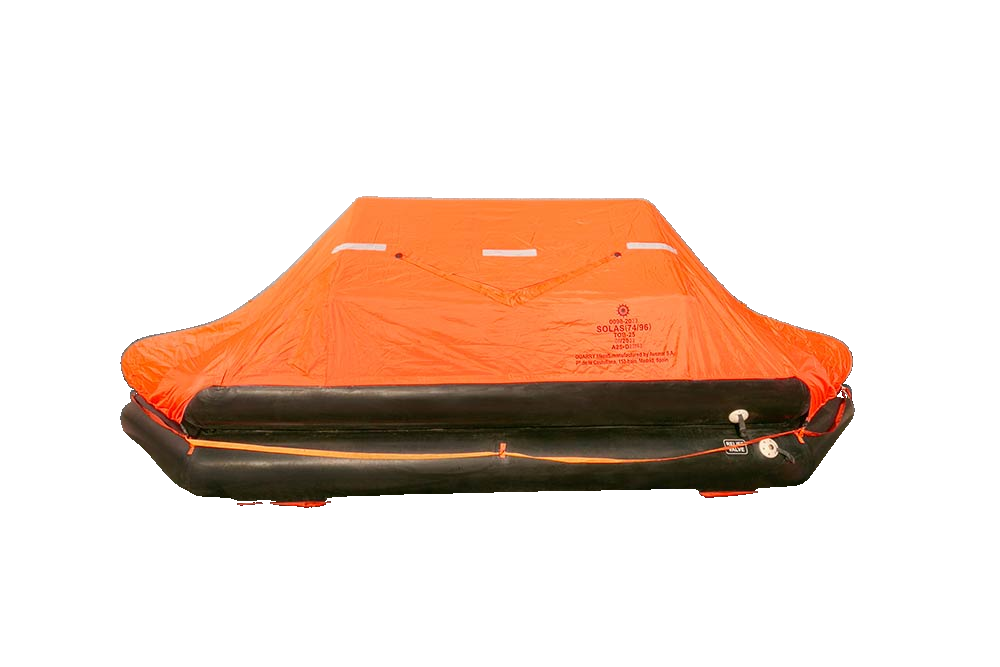
SOLAS throw-overboard
Throw-overboard liferaft with a protective canopy.
Photo: Duarry / AUSMARSwitlik: coastal, offshore and transoceanic
Switlik’s marine range includes the CPR Coastal Passage Raft, OPR Offshore Passage Raft and SAR-6 Transoceanic. The OPR shown in the gallery uses heat-sealed construction and air inflation, with a convertible canopy. These are features of that model, so they should remain tied to it when comparing the wider range.
The offered configuration also matters. Container and valise versions bring different packaging considerations, while the documented capacity and supplied equipment establish what is included. A photograph helps explain the raft’s layout, but its apparent spaciousness cannot establish its capacity rating.
Switlik advertises a five-year service interval for the OPR. That can be relevant to an ownership-cost comparison once the conditions attached to it—and its acceptability for the vessel’s operation—are understood.
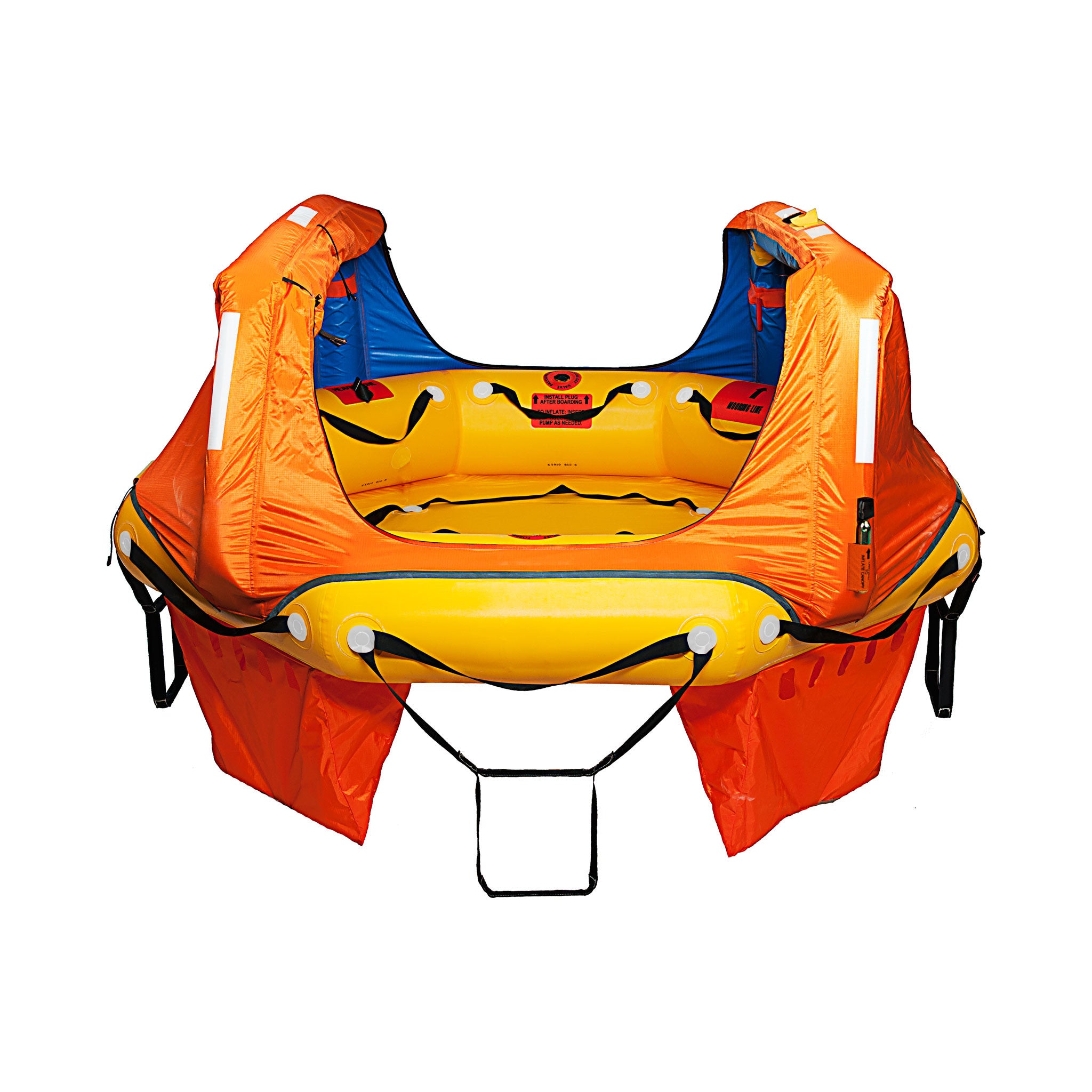
CPR Coastal Passage Raft
Coastal model in Switlik’s marine range.
Photo: SwitlikOther brands belong in the comparison too
Ocean Safety, Plastimo and the liferaft brands within Survitec provide further options where their models suit the boat and cruising area. Looking beyond the first few familiar names can also give a clearer sense of the features available.
Ocean Safety’s Ocean ISO, for example, has a boarding ladder with knee support and handholds. That gives you a specific arrangement to examine alongside the entrances and boarding aids on other rafts. Plastimo’s liferaft range offers another starting point for a leisure-boat shortlist.
Survitec’s portfolio includes RFD and Survitec Zodiac. When replacing an older raft, its full model details and records help the supplier identify the equipment and establish a suitable replacement.
Choose support that follows your route
For a boat kept in one place, a nearby service station can make ownership straightforward. A yacht moving between the Caribbean, the United States and Europe has a different planning problem: its next service may fall due far from the original supplier.
That makes the service network worth investigating before purchase. The US Coast Guard’s liferaft servicing directory lists accepted facilities and the makes they service, and specifies that a facility must be approved for the make and model concerned. The Dutch ILT also publishes a list of approved liferaft service stations in the Netherlands.
These directories help with US and Dutch connections. The requirements for an individual vessel still come from its flag and operation, together with the manufacturer’s instructions. A listing is therefore a starting point for contacting the station and confirming support for the exact raft and the documents needed.
The practical arrangements extend beyond the workshop appointment. Transport and parts can affect the time involved, and a vessel that needs a raft to remain operational may require suitable replacement equipment while its own is away.
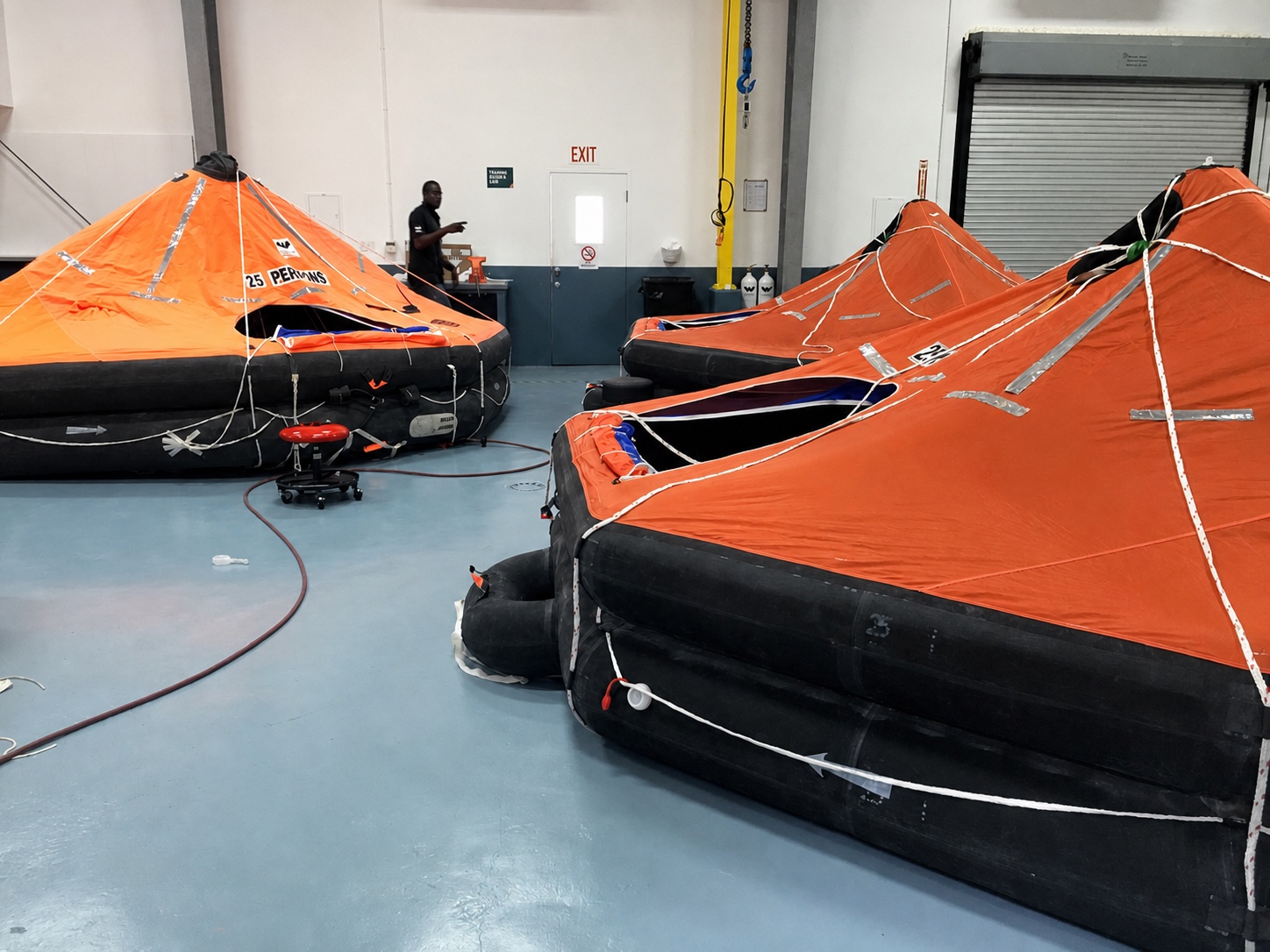
Purchase price, service cost and useful life
The purchase price is only the first cost of ownership. Servicing quotations may include different allowances for replacement equipment, additional tests, transport and disposal, so a meaningful comparison needs equivalent configurations over the same period.
The raft’s service life also deserves separate attention from its warranty. In a Practical Boat Owner reader case, Seago explained that the raft concerned had a 12-year warranty and a 15-year lifespan. It had reached its age limit rather than simply lost warranty cover. Those figures applied to that particular product generation and should not be extended to every Seago raft or another manufacturer’s equipment.
For the model being offered, its warranty terms, servicing schedule and any stated age limit provide the relevant information. With a used raft, the manufacture date and service history become especially important. An appropriate station can advise on continued support before the purchase, helping establish whether a low price still represents good value once approaching service or replacement costs are considered.
Turn the research into a shortlist
A shortlist becomes useful when every model on it can meet the vessel’s needs. For a pleasure boat or small yacht, that includes suitable protection, manageable packed weight, practical stowage and accessible servicing. Offshore cruising brings particular attention to boarding, shelter, the emergency pack and support along the route. Larger yachts and commercial vessels need the approval and installation requirements resolved before narrowing the manufacturers.
With two or three suitable models identified, the remaining differences can be discussed on common terms. Giving each supplier the same vessel and operating information makes their written answers easier to compare:
- What exact model, capacity, approval and emergency pack are being supplied?
- What are the packed dimensions and weight, and how will it fit the intended installation?
- What boarding, shelter and righting features distinguish it from the alternatives?
- Which stations can service this model where the vessel operates?
- What are the servicing conditions, likely extra charges, warranty terms and any stated service-life limit?
Where to read more
Sailing forums and yachting publications offer a useful view of ownership beyond the catalogue. Cruisers Forum has a dedicated safety-equipment section, while YBW Forums and YachtForums host discussions about liferafts, servicing and replacement. These conversations can help identify questions about support in the places you expect to sail.
YachtWorld’s Lifeboat and Life Raft Basics was updated in February 2026. Life Raft Professionals also published a RescYou model comparison in July 2026. The latter is a retailer’s guide, so it offers a different kind of evidence from an independent sea trial.
These sources work best alongside the manufacturer’s current specifications. The date of the equipment test matters as well as the webpage’s update date: an older review may describe a model or emergency pack that differs from the one now being offered.
Sources and further reading
View all 16 references
- Yacht liferaft range and model selection
VIKING
- Liferaft service network
VIKING
- Yachting ISO liferaft range
Arimar
- SOLAS liferafts and launch arrangements
AUSMAR / Duarry
- Offshore Passage Raft specifications
Switlik
- Ocean ISO liferaft
Ocean Safety
- Liferaft portfolio
Survitec
- Warranty and lifespan: reader case and manufacturer response
Practical Boat Owner
- Cruisers Forum
Owner discussions
- YBW Forums
Owner discussions
- YachtForums
Owner discussions
- Lifeboat and Life Raft Basics
YachtWorld · updated February 2026
- RescYou model comparison
Life Raft Professionals · retailer guide, July 2026
- US Coast Guard’s liferaft servicing directory
US Coast Guard
- list of approved liferaft service stations
Dutch ILT · stations in the Netherlands
- Marine liferaft range: CPR, OPR and SAR-6
Switlik