
Fire extinguisher types and applications
Choose extinguishing media from the fuel, occupied space, electrical risk, clean-up consequence and rules—not from cylinder colour or one familiar acronym.
Sources checked August 2, 2026
A portable extinguisher is a first-aid firefighting tool for a developing fire when escape remains available and the user has been trained. The wrong medium can spread burning liquid, react with metal, expose the user to electricity, obscure an escape route or leave damaging residue across critical equipment. Selection therefore begins with credible fire scenarios and the rules governing the premises or vessel.
This guide explains the main media and how their strengths change across home, commercial, marine and industrial settings. It is not a premises fire-risk assessment, vessel fire-control plan or authority approval. Use it to prepare the right questions for a competent fire-safety provider and to understand why one site usually needs more than one extinguisher type.
Identify the fuels and credible fire classes
Ordinary combustible materials, flammable liquids, flammable gases, combustible metals, energized electrical equipment and cooking oils do not respond to extinguishing media in the same way. Classification letters also vary between standards: for example, the label used for energized electrical equipment in one system is not identical to another. Read the rating and approval printed on the actual extinguisher and apply the standard used by the local authority, vessel or workplace.
Build the hazard list by room, compartment or work area. Record fuel, heat source, electrical energy, ventilation, occupancy and the path to safety. Then consider the fire size a portable unit is expected to address and who may use it. Extinguishers do not replace detection, alarms, fixed systems, compartmentation, shutdowns, evacuation procedures or trained emergency response.
- Combustible solids
- Flammable liquids and gases
- Energized electrical equipment
- Cooking oils and fats
- Combustible metals and specialist hazards
Understand what each extinguishing medium does
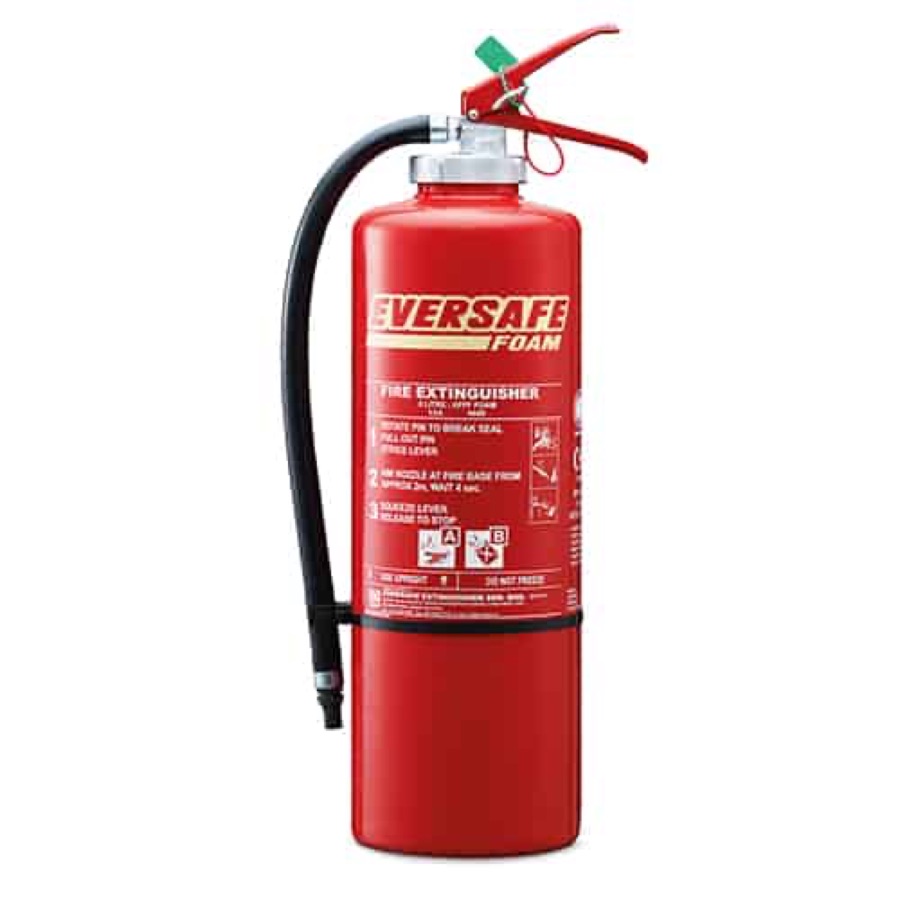
Water-based extinguishers cool ordinary combustibles but are not a general answer for flammable liquid, energized electrical or reactive-metal fires. Foam can blanket suitable flammable liquids and cool solids, but product approval and fuel compatibility matter. Carbon dioxide leaves no residue and can suit some electrical or liquid risks, yet it provides limited cooling, can allow re-ignition and creates an asphyxiation concern in confined spaces.
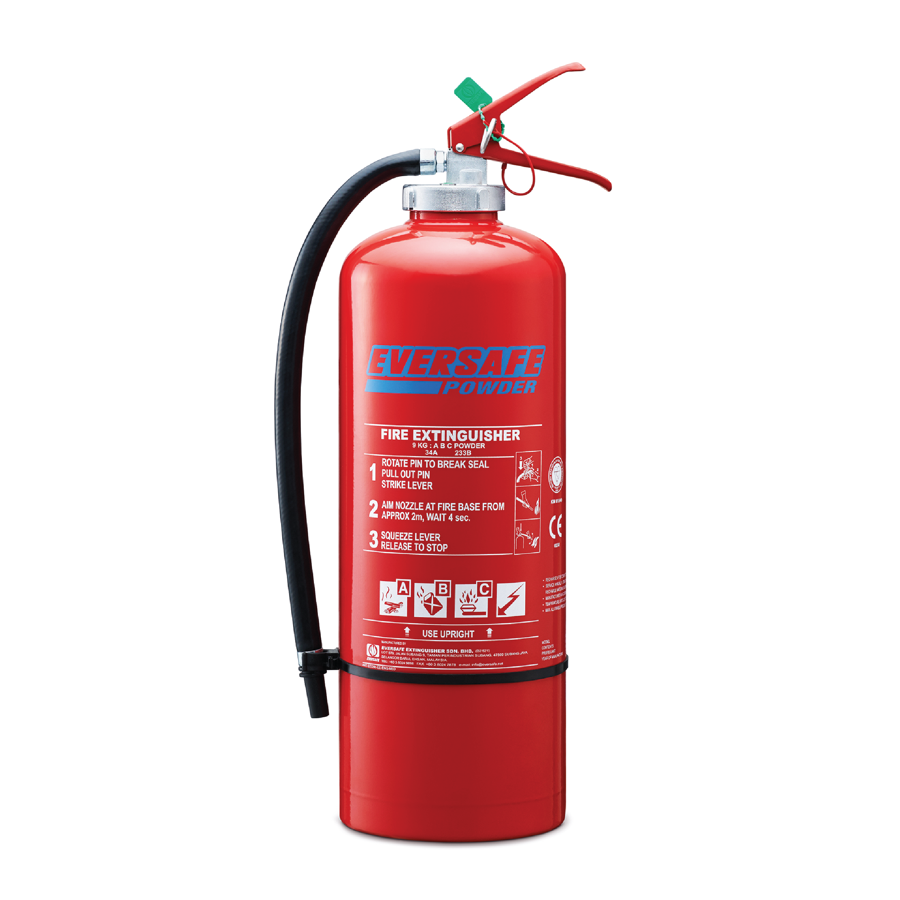
Dry powder interrupts flame chemistry and offers broad ratings, but discharge can destroy visibility, affect breathing and contaminate machinery or electronics; it also gives limited cooling. Wet chemical is designed for high-temperature cooking oils and fats and usually carries an additional ordinary-combustible capability. Clean agents can protect sensitive spaces with less residue, while combustible-metal fires require a medium matched to the specific metal. No agent should be described as safe for every fire.
- Water: strong cooling for suitable solid fuels
- Foam: suitable liquid blanketing plus cooling where approved
- CO₂: residue-free but limited cooling and confined-space concerns
- Dry powder: broad knockdown with visibility and contamination costs
- Wet chemical, clean agents and Class D media for defined hazards
Home: cover escape first, then the likely room hazard
Domestic selection should follow local fire-service guidance and the layout of the home. Smoke alarms, an escape plan and early evacuation do more to protect life than placing an oversized extinguisher where nobody can reach it. If an extinguisher is provided, it should be near an exit route rather than behind the likely fire, and occupants should understand that a spreading fire calls for evacuation and emergency services.
A kitchen introduces hot-oil and energized-appliance risks that differ from bedrooms, living areas or a garage. A fire blanket and appropriate wet-chemical equipment may be relevant to cooking-oil scenarios; water should not be thrown onto burning oil. Garages and workshops can introduce fuel, solvent, battery and electrical hazards that need their own assessment rather than being treated as an extension of the living room.
- Smoke detection and escape plan
- Equipment reachable from an exit
- Cooking-oil strategy
- Garage fuel and electrical risks
- Simple training for every intended user
Commercial: follow the risk assessment and occupancy
Offices, shops, restaurants, hotels, kitchens, workshops and warehouses have different fuel loads and users. The fire-risk assessment should determine ratings, locations, travel distance, signage, maintenance and training under the applicable code. Public occupancy also raises the importance of clear escape routes and equipment that untrained people will not misuse in a way that increases danger.
Commercial kitchens need special attention to deep-fat fryers, extraction systems, fuel shutoff and wet-chemical protection. Server, electrical and plant rooms may favour media that limits residue, but personnel safety and enclosure size still control the decision. General-purpose powder can look economical while creating severe clean-up and business-interruption costs in an indoor office or hospitality environment.
- Documented premises risk assessment
- Occupancy and user competence
- Kitchen and extraction-system protection
- Electrical and data-room consequences
- Inspection, signage and maintenance programme
Marine: connect portable units to the vessel's whole fire plan
A vessel combines machinery, fuel, electrical generation, batteries, accommodation, galley and restricted escape routes inside a moving platform. Portable extinguishers must align with the vessel's fire-control plan, flag or code requirements, approval markings and the hazards in each location. Machinery spaces may also rely on fixed suppression, detection, fuel shutdown, ventilation closure and remote release arrangements that must function as one system.
Marine conditions affect maintenance. Vibration, salt, humidity, mounting, blocked access and base corrosion can compromise a unit that appears present on the inventory. Record each extinguisher by serial number and location, inspect the bracket and hidden surfaces, and keep service documentation matched to the physical cylinder. Removing units for service also requires an agreed temporary-protection plan.
- Flag, code and fire-control plan
- Machinery-space fixed suppression
- Galley, accommodation and electrical hazards
- Marine corrosion and mounting
- Temporary protection during shore service
Industrial: treat specialist processes as specialist hazards
Factories, fuel facilities, paint work, welding areas, laboratories, battery rooms and metalworking operations can exceed the assumptions behind ordinary portable-extinguisher placement. Process isolation, automatic suppression, detection, drainage, ventilation, spill control and trained response may be more important than adding more cylinders. Hazardous-area electrical classification and chemical compatibility can also affect equipment selection.
Combustible metals require a medium proven for the specific metal and process; using water or a general powder can intensify some reactions. High-voltage equipment, lithium-ion battery systems and energized machinery require current specialist guidance rather than improvised labels. Industrial selection should be owned by a competent risk assessor who can connect the extinguisher to process controls and emergency procedures.
- Process-specific fire and explosion assessment
- Specialist metal or chemical media
- Electrical and battery hazards
- Fixed suppression and isolation
- Trained response and post-discharge plan
Buy, place and maintain the exact approved unit
Once the required medium and rating are known, compare certified products, operating temperature, throw range, discharge time, cylinder size, mounting and user ergonomics. Check the approval and operating instructions on the delivered unit rather than assuming a catalogue image represents every variant. Product sales for Safety Pelican customers are handled by The Marine Store by SM Caribbean; the Safety Pelican service page remains focused on inspection, servicing and certification.
Create an equipment register with location, manufacturer, model, serial number, medium, rating, manufacture date and service history. Follow the applicable inspection and maintenance programme and the manufacturer's instructions. After any use, damage, corrosion, missing seal or questionable pressure indication, isolate the concern and have the unit assessed by competent personnel rather than test-firing or dismantling it.
- Certified medium and rating
- Correct operating range and mounting
- Readable instructions and identification
- Location-based equipment register
- Competent inspection, service and refill
Official sources
Manufacturer and authority references for this guide. Check the current requirements for your equipment and vessel.
- Improved guidelines for marine portable fire extinguishers — Resolution A.951(23)
International Maritime Organization
- MGN 276 (M+F) Amendment 1 — maintenance of portable fire extinguishers
UK Maritime and Coastguard Agency
- Portable fire extinguishers — 29 CFR 1910.157
United States Occupational Safety and Health Administration
- Fire extinguishers
U.S. Fire Administration
- Portable fire extinguishers
Buckeye Fire Equipment