
ACR emergency beacons: identification and service guide
Identify an ACR EPIRB or PLB, verify country coding and registration, and prepare battery or technical-service records without compromising the beacon.
Sources checked August 2, 2026
An ACR beacon is both physical survival equipment and a registered radio identity. The model, part number, UIN or hexadecimal identification, country coding, battery date, programming and owner record must agree. A battery replacement can return the hardware to a tested condition, but it cannot correct missing registration or an ownership record left in another person's name.
The Safety Pelican supports ACR equipment within its current authorised scope in Sint Maarten. Send the exact identity before delivery so the station can confirm whether the request is a battery-service, test, programming, registration-support or replacement question and route it correctly.
Model and encoded identity
Country coding
Current vessel and contact details
Record the beacon identity without activating it
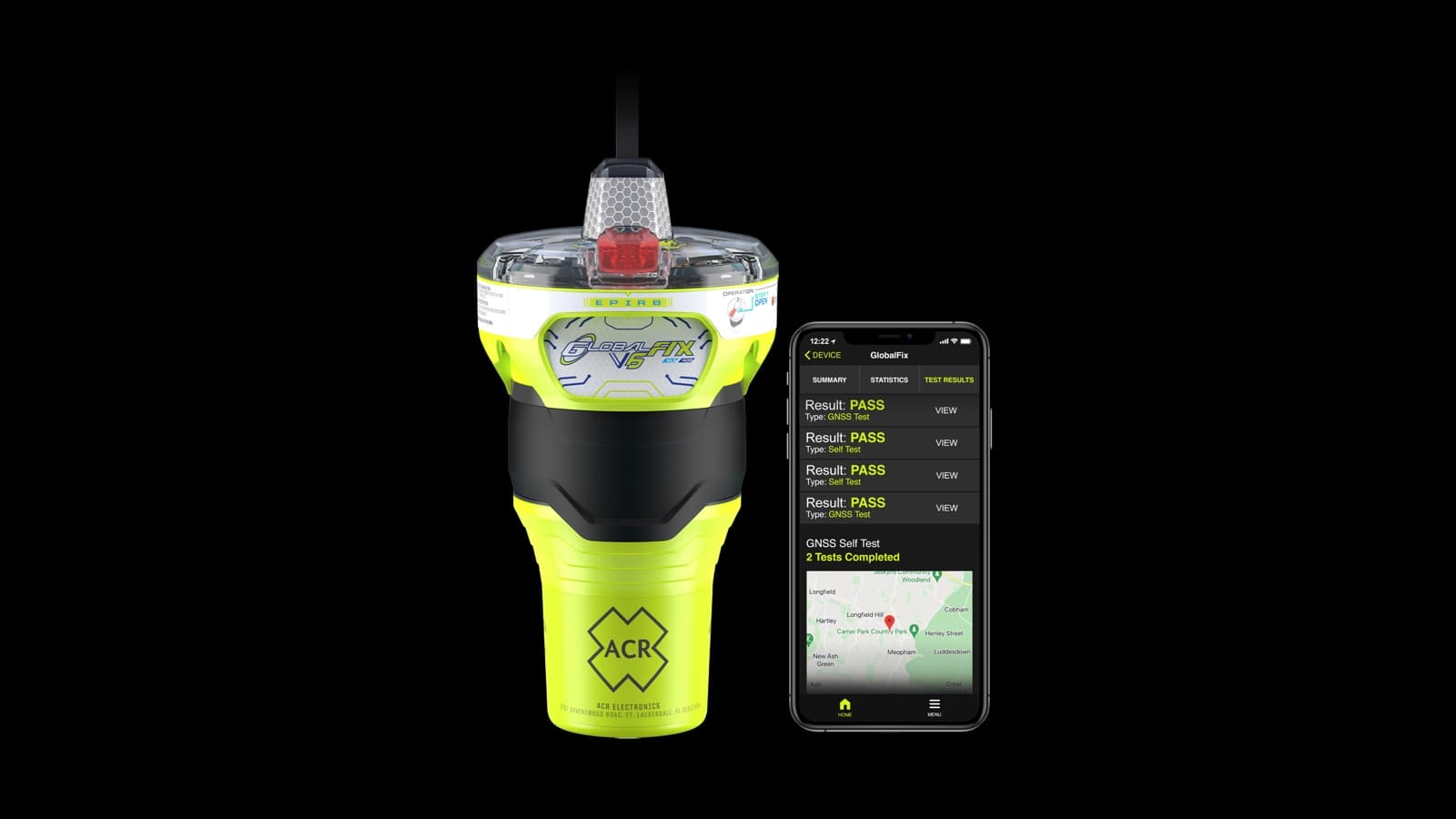
Photograph the front, rear label, battery-expiry label, bracket or float-free housing and any separate hydrostatic release. Record the product name, model, part number, serial number and UIN or hexadecimal ID exactly. Do not press an unfamiliar button merely to prove the unit powers on; use only the self-test procedure and frequency permitted by the model's current manual.
For an EPIRB, show whether it is manually deployed or carried in an automatic float-free enclosure and record the vessel location. For a PLB, note the intended assigned person. If a label is damaged, use the previous service or registration record as supporting evidence but flag the discrepancy for resolution.
- Model and part number
- Serial and UIN or Hex ID
- Battery replacement date
- Manual or float-free housing
- Bracket and hydrostatic-release details
Check programming and registration as separate controls
ACR directs owners to register 406 MHz beacons with the appropriate national authority. The programmed country is visible through the beacon identity, while the registration record tells search-and-rescue authorities who owns the beacon, what vessel or person it belongs to and whom to contact. A transfer of ownership, flag change or move between countries can require deregistration, reprogramming or a new national registration.
Bring the current registration confirmation when asking for service. After any programming change, compare the returned UIN to the new registration and to the label on the beacon. The station can explain the technical path, but the owner remains responsible for submitting and keeping the authority record current.
- Programmed country
- Current national registration
- Vessel or personal assignment
- Ownership and flag changes
- Post-service UIN reconciliation
Battery service includes functional control, not a loose-cell swap
ACR states that, unless a product manual expressly provides for user replacement, EPIRB and PLB battery work belongs with a certified battery replacement centre. The work uses the correct battery assembly and includes the hardware, seals, tools, software and functional testing needed to verify the beacon after replacement. Opening the case outside that process can compromise watertight integrity and traceability.
Battery timing is model-specific and the printed expiry date matters. An emergency activation, accidental transmission, damage, water ingress or failed self-test should be reported immediately rather than held until routine expiry. Lithium-battery transport rules can affect shipping, so ask the station for packing instructions before sending a beacon by air or courier.
- Certified battery-service route
- Model-specific battery assembly
- Seals and functional testing
- Activation or failed-test history
- Lithium transport instructions
Prepare the beacon and its data as one service package
Send label photographs, model, UIN, battery date, registration country, vessel flag, previous service record and the reason for the request. Report self-test indications accurately and state when the test occurred. If the automatic housing or hydrostatic release is part of the concern, include it explicitly rather than delivering only the beacon body.
At return, match beacon, certificate, battery label, programming and registration. Reinstall the unit where it can release and transmit as designed, with clear crew access and current instructions. Log the next battery or external-release date in the equipment register; these are different components and may not share the same due date.
- Identity and battery photographs
- Registration country and proof
- Self-test or activation history
- Housing and release components
- Updated equipment register
Official sources
Manufacturer and authority references for this guide. Check the current requirements for your equipment and vessel.
- ACR support
ACR Electronics
- Beacon battery replacement
ACR Electronics
- What to know when buying a used or new EPIRB, PLB or ELT
ACR Electronics