
What to send before liferaft service
Give the service station enough information to identify the raft, understand its installation and plan the handover before it leaves the vessel.
Sources checked July 31, 2026
Do not open the container, break a seal or rely on a handwritten description. A useful service request connects photographs of the physical raft with its current service record, vessel details and the date the equipment is needed back.
This preparation does not replace the manufacturer’s handling instructions or the vessel’s applicable requirements. It gives the station the evidence needed to assess the request and tell you what should happen next.
Create one identity set for each raft
Begin with photographs that let the station distinguish one raft from every other unit aboard. Take an overall photograph first, then move close enough for the identification plate or label to be readable. If the vessel carries several similar rafts, keep the photographs grouped by stowage position or assign each raft a temporary reference such as port forward or starboard aft.
The manufacturer, model, serial number, capacity and pack type are more useful than a photograph of the container alone. If a label is damaged or unreadable, show the problem rather than filling the gap from memory.
- The complete canister or valise from more than one angle
- The manufacturer’s identification plate or label
- Model, serial number, capacity and pack type where shown
- The raft’s stowage position when more than one unit is aboard
Show the outside without breaking a seal
Photograph visible damage, corrosion, cracked or distorted container parts, broken bands, missing seals and anything that has changed since the last service. Include the cradle, securing arrangement and hydrostatic release unit when they are part of the installation. These photographs help the station identify handling or replacement questions before collection.
Do not open the container or valise to create better photographs. The internal condition must be assessed through the applicable servicing procedure at an authorised station.
- Container, valise, straps and seals
- Cradle and securing arrangement
- Hydrostatic release unit and its visible date, where fitted
- Damage, contamination or missing components
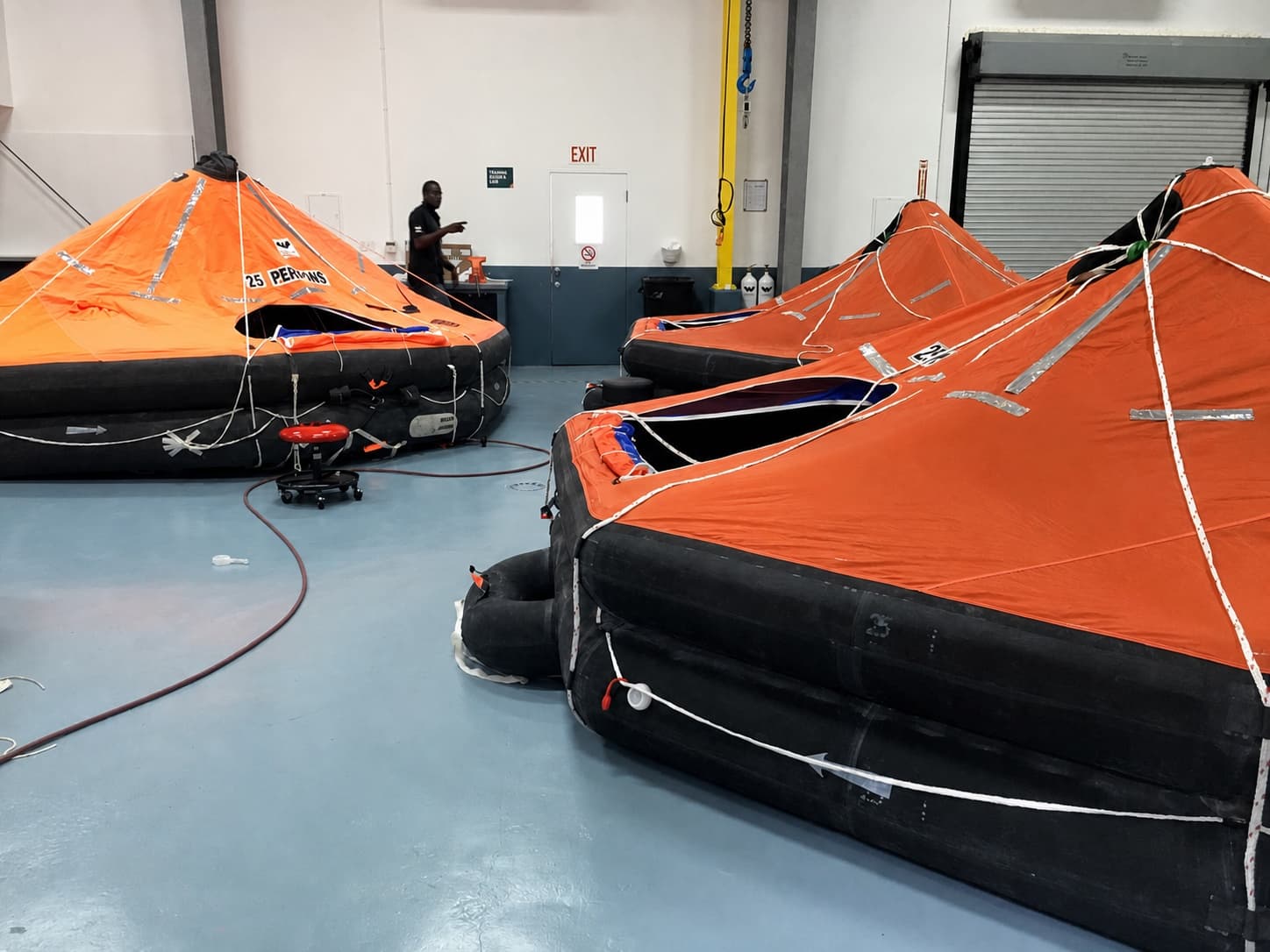
Match the service record to the physical raft
Send the latest service certificate or maintenance record in full, including any reverse page or attachment. Compare the manufacturer, model and serial number on the document with the photographs. A certificate for another raft cannot establish the status of the unit being delivered.
If the record is missing, say so. The station can then tell you which other identification or history may be needed before it can assess the request.
- Latest service certificate or service report
- Date and station shown on the record
- Manufacturer, model and serial-number match
- Previous repair or deployment information you know
Describe the vessel and installation
State the vessel name, flag, type of operation and operating area. Add any class, charter, survey or flag instruction already supplied to you. The station needs this context because a private yacht, commercial vessel and SOLAS ship may not follow the same servicing arrangement.
Explain how the raft is installed: canister or valise, throw-overboard or davit-launched, and its location aboard. Specially configured rafts can have installation details that matter when the equipment is returned to the vessel.
- Vessel name, flag and IMO number or call sign where applicable
- Private, charter, commercial or other operating status
- Operating area and next voyage
- Stowage position and launching arrangement
Give the team a workable service window
Give the current port or berth, the earliest handover date and the date the raft must be back aboard. Include the next sailing, charter, survey or inspection date when it affects the schedule. A complete request helps the station assess capacity and timing; it does not reserve a slot until the team confirms it.
If the vessel needs temporary replacement cover while its own raft is in service, request that separately and include passenger capacity, operating area and the exact dates. Rental availability and suitability must be confirmed for the voyage.
- Current location and access contact
- Earliest collection or drop-off date
- Required return date
- Next departure or survey date
Confirm the handover before the raft moves
Wait for the station to confirm that it can assess the make and model, how the raft should be delivered and when it can be received. Follow the manufacturer’s handling instructions during removal and transport. VIKING’s published user guidance, for example, recommends transporting its liferaft containers horizontally; instructions for another product may differ.
The vessel remains responsible for its required safety equipment and applicable compliance arrangements while a raft is ashore. Coordinate the removal with the master, operator and any relevant survey, class or flag contact rather than assuming that submitting a service request authorises the equipment to leave the vessel.
- Station acceptance and handover time confirmed
- Safe removal and access plan agreed aboard
- Manufacturer handling instructions available
- Any replacement-cover or compliance question resolved
Official sources
Manufacturer and authority references for this guide. Check the current requirements for your equipment and vessel.
- Recommendation on conditions for the approval of servicing stations for inflatable liferafts — Resolution A.761(18)
International Maritime Organization
- Liferaft User Instructions
VIKING Life-Saving Equipment
- MGN 548 (M+F) Amendment 1 — inflatable SOLAS life-saving appliances
UK Maritime and Coastguard Agency